
News
Find out about the latest news, announcements and stories about science and medicine at ANU.

Wildfires and threats in the sights: Microfocussing system set to transform infrared detectors
Researchers have developed a highly sensitive method for detecting environmental hotspots, such as bushfires or military threats, by harnessing the focusing power of meta-optical systems.
Read the article
- News
Researchers have developed a highly sensitive method for detecting environmental hotspots, such as bushfires or military threats, by harnessing the focusing power of meta-optical systems.
- Research story
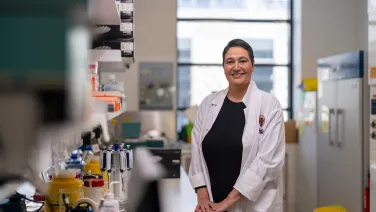
The National Centre for Indigenous Genomics is working with Indigenous communities on the ethical and respectful use of the stories held within DNA.
- News
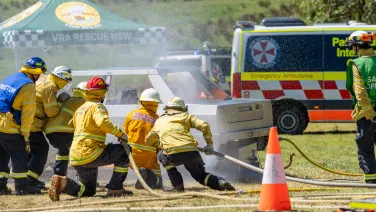
Lights. Camera. Action. Go behind the scenes as ANU medical students bring an emergency simulation to life.

- News
Australia will develop stronger capabilities in nuclear and radiation science thanks to a new ARC Industrial Transformation Training Centre for Radiation Innovation (RadInnovate) opening today.

- News
The threat posed by superbugs to travellers from countries around the globe has been revealed in a new study.

- Academic profile
Plant scientists Professor Graham Farquhar and Professor Susanne von Caemmerer transformed the world's understanding of photosynthesis, now they're receiving one of the Commonwealth's top honours for their research.

- News
Scientists from The Australian National University (ANU) have analysed signals generated by the vibrations of traffic along the Federal Highway to learn more about the seismic nature of Lake George, situated north-east of Canberra.
- News
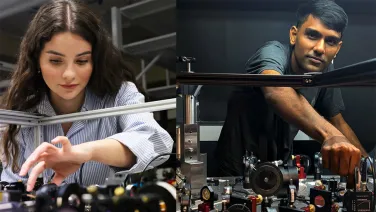
A new protocol for encoding quantum data, based on throwing data away, could improve security of quantum communications as much as threefold.
- News
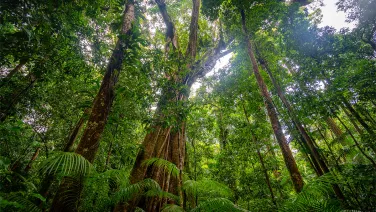
The trunks and branches of trees in Australia’s tropical rainforests – also known as woody biomass – have become a net source of carbon dioxide to the atmosphere, according to a new international study.