News
Find out about the latest news, announcements and stories about science and medicine at ANU.

ANU researcher wins NHMRC award for global cancer trial
Professor Mark Polizzotto has won an NHMRC award for his global study testing whether a daily tablet could replace chemotherapy for a cancer that kills up to half its patients in Africa.
Read the article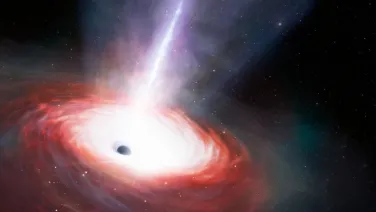
- News
One of the most powerful black holes in the universe is belching out gas at speeds of up to 10,000 kilometres per second, making its estimated mass more than 10 times lower than first thought.

- Research story
Physicists have pioneered a new method for making a rare form of silicon, prized for its remarkable properties. It's work that took ten years to come to fruition.
- News
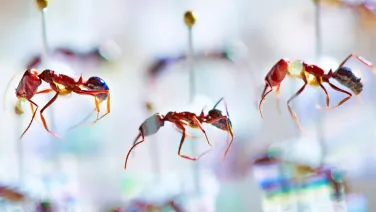
A new approach to analysing museum specimens has revealed a massive decline in Fiji’s native ant species since the arrival of humans to the islands

- News
The iridescent blue of butterfly wings has inspired researchers to find a solution to a challenge previously considered insurmountable.

- News
A tough winter has taken its toll on Canberra’s bird population, with less than half of the superb fairy-wrens that live in the Australian National Botanic Gardens surviving.

- News
An international team of scientists have observed a collision of two black holes, violent and energetic events in the cosmos, in detail never-before-seen.
- News
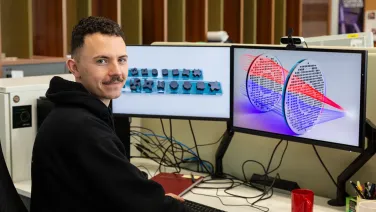
A new approach to manufacturing multicolour lenses could inspire a new generation of tiny, cheap, and powerful optics for portable devices such as phones and drones.

- News
Congratulations to Professor Susanne von Caemmerer FRS and Professor Graham Farquhar AO FRS, who have been recognised with one of the top prizes in science.

- Academic profile
As climate scientist Professor Nerilie Abram is about to embark on a new job as Chief Scientist at the Australian Antarctic Division, she reflects on her love and dedication for Antarctic science.