

A lesson in advanced materials: why it can take the longest time to find the shortest path
Over a decade ago, ANU physicists Professor Jodie Bradby and Associate Professor Bianca Haberl had an idea. But it wasn’t exactly a eureka moment. At least not yet.
“We wanted to push materials further than before, and in new directions,” says Associate Professor Haberl.
They were studying silicon, an important semiconductor material, and chasing one of its rare crystal forms, called r8, which has remarkable properties.
At the time, the only way to make this rare phase was to crush crystalline silicon under enormous pressure. These pressures can be achieved in places like university laboratories but such methods are far from industry-ready.
“Then, Bianca and I had this intuition that there might be an easier cheat pathway if we started with disordered amorphous silicon, which has a disordered structure like a glass, not ordered like a crystal,” says Professor Bradby.
“The inherent disorder allows for small seeds of any possible structural configuration and thus offers significantly more flexibility than the rigid crystal.”
More than a decade later, they and an international team of scientists have finally delivered the proof.
“We can trick materials into new structures with unique properties,” explains Professor Bradby, who is now Interim Director of the ANU Research School of Physics.
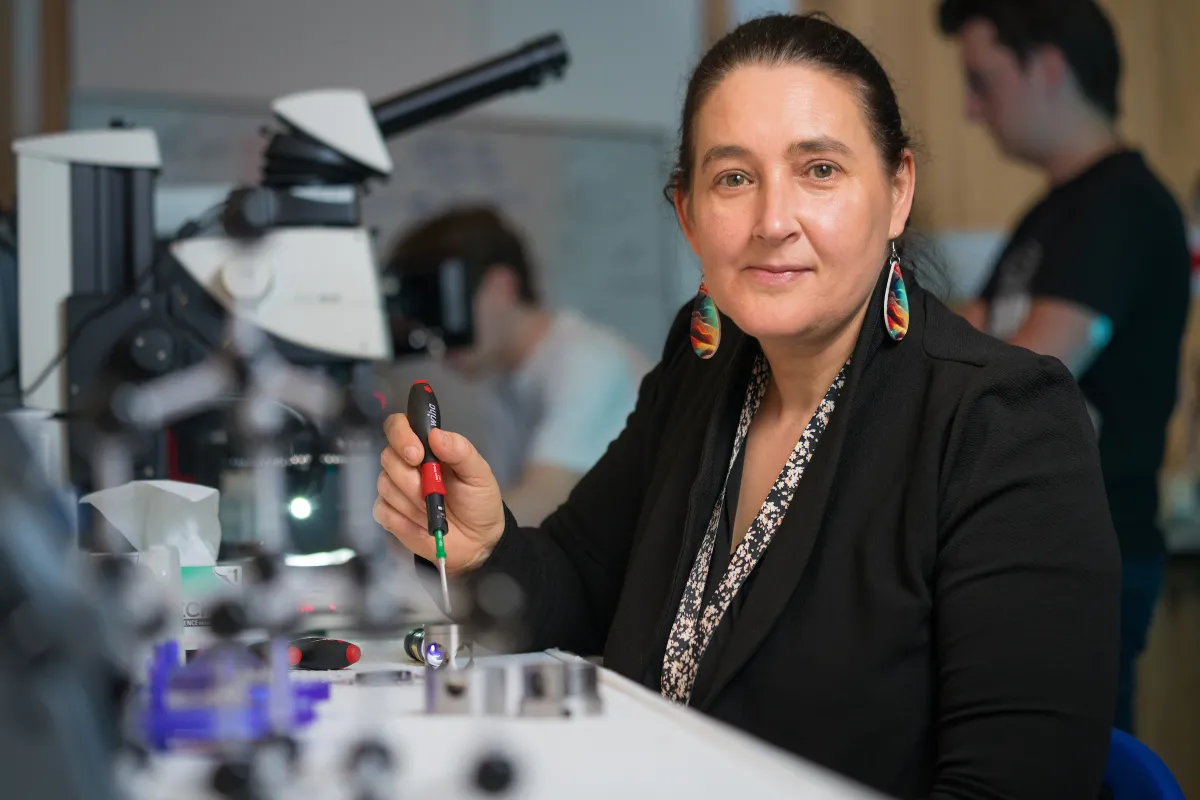
Their paper in Materials Today shows that compressing amorphous silicon at room temperature transforms it into the sought-after r8 phase using about 25 per cent less pressure.
Silicon is already used in solar cells, but the r8 phase could make solar energy more efficient as it can capture the whole spectrum of light.
“Silicon is also non-toxic and abundant,” says Associate Professor Haberl, who completed the research at Oak Ridge National Laboratory in the United States, “making it a better option than using rare earth metals or toxic materials.”
Like other elements, silicon’s properties depend on atomic arrangement, just as how carbon atoms can form charcoal, graphite or diamond.
“To make r8 silicon previously, we used ridiculously high pressures that you can’t use industrially,” says Associate Professor Haberl. “Now we can make it using pressures closer to the amounts people already use in industry to make diamonds.”
Their breakthrough relies on an elegant idea called density matching. Under pressure, amorphous silicon compresses until its density matches that of r8. At this critical density, the large structural flexibility of the amorphous material enables atoms to be guided into the new crystal structure, in a way that cannot be replicated in the rigid crystal.
“What we’ve witnessed is the emergence of order from disorder,” says Professor Bradby.
“It’s like finding a hidden shortcut through a mountain range, instead of climbing over the peaks.”
“The fact that we’ve found this new shortcut in silicon is pretty cool,” says Professor Bradby. “Especially as it has been studied so intensively since the 1950s when it became the material of the modern age.”
And their shortcut doesn’t just work in silicon; it also works with another important semiconductor material.
“We’ve shown that density matching also works in germanium, suggesting that it can be applied to other materials as well,” says Associate Professor Haberl.
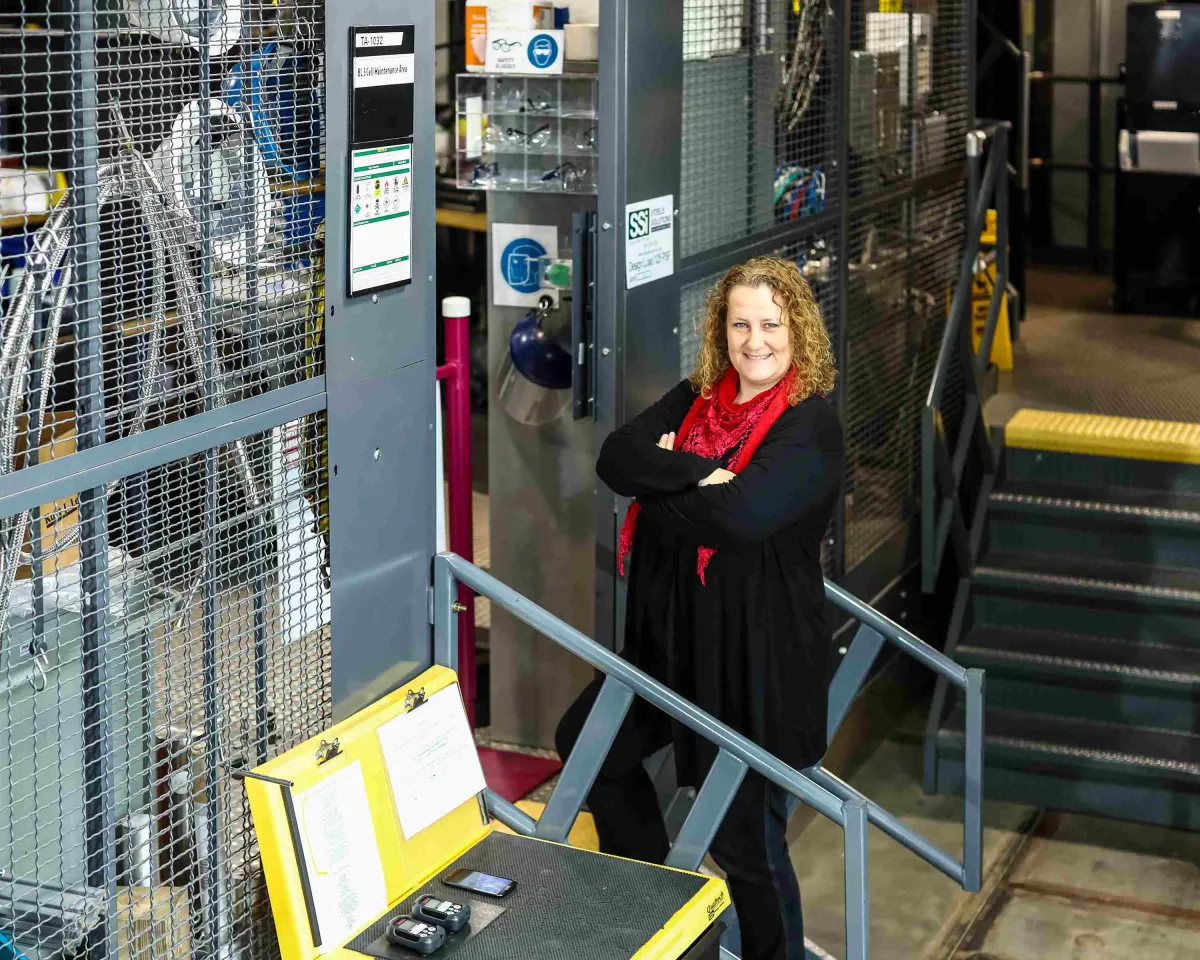
The most famous sister element in silicon’s family is carbon, which, beyond its electrical properties, is crucial to industry due to its hardness, when in the diamond form.
“Carbon is a prime candidate to try,” says Associate Professor Haberl. “There are predictions that a similar structure exists in carbon, which would be harder than diamond. But nobody has been able to make it yet.”
If achievable, such a material could surpass current thresholds in cutting and grinding, making it an ideal material for difficult mining applications.
What’s more, density matching could also open new possibilities for advanced materials comprised of multiple elements.
“You could potentially make entirely new compound semiconductor structures that have different properties, different band gaps, and different behaviours,” says Associate Professor Haberl. “We are always looking to improve any semiconductor device, not just solar cells.”
While such applications may still be a long while off, this doesn’t dampen their enthusiasm about the new technique.
“It’s a fundamentally new way to think about materials design,” says Associate Professor Haberl. “Opening up new engineering pathways, where we can harness the flexibility of amorphous materials to guide the precise structures that we want.”
“Density-matched engineering of materials could be a whole new thing, and I think that’s pretty exciting.”
Their discovery marks the culmination of over a decade of research.
“We first submitted the paper in 2015,” says Professor Bradby. “It’s been a passion project, and a lot of people have worked for a long time to prove this point.”
When they first came up with the idea, Associate Professor Haberl was a post-doctoral researcher at ANU. She has since worked at Oak Ridge National Laboratory, before recently returning to ANU as an Honorary Associate Professor.
She says the 10-year gap between first submission and publication was advantageous, as it allowed for advancements in material production and computing.
“Now it’s a much better paper,” says Associate Professor Haberl. “We have shown that this pathway is fundamental, and the modelling and contributions by others helped us understand the mechanism of density matching a lot better.
This deeper understanding has the potential for big payoffs in speed and efficiency of materials research and development.
Ironically, finding a new, shorter path to materials discovery was only possible by taking the long road.
“Bianca and I could only continue to work on this because we stayed in the field, giving us opportunities to poke away at it,” says Professor Bradby.
“Slow science isn’t easy to fund, but sometimes you need sufficient time and resources to get to a discovery.”
Related content

The Australian National University (ANU) has led an international project to make a diamond that's predicted to be harder than a jeweller's diamond and useful for cutting through ultra-solid materials on mining sites.

An international team of scientists has defied nature to make diamonds in minutes in a laboratory at room temperature - a process that normally requires billions of years, huge amounts of pressure and super-hot temperatures.

What happens to all those stories which start with the promise of an exciting new scientific breakthrough, but don’t end that way?