
Are rocks magnetic?
Summary
Degree programs
Research themes
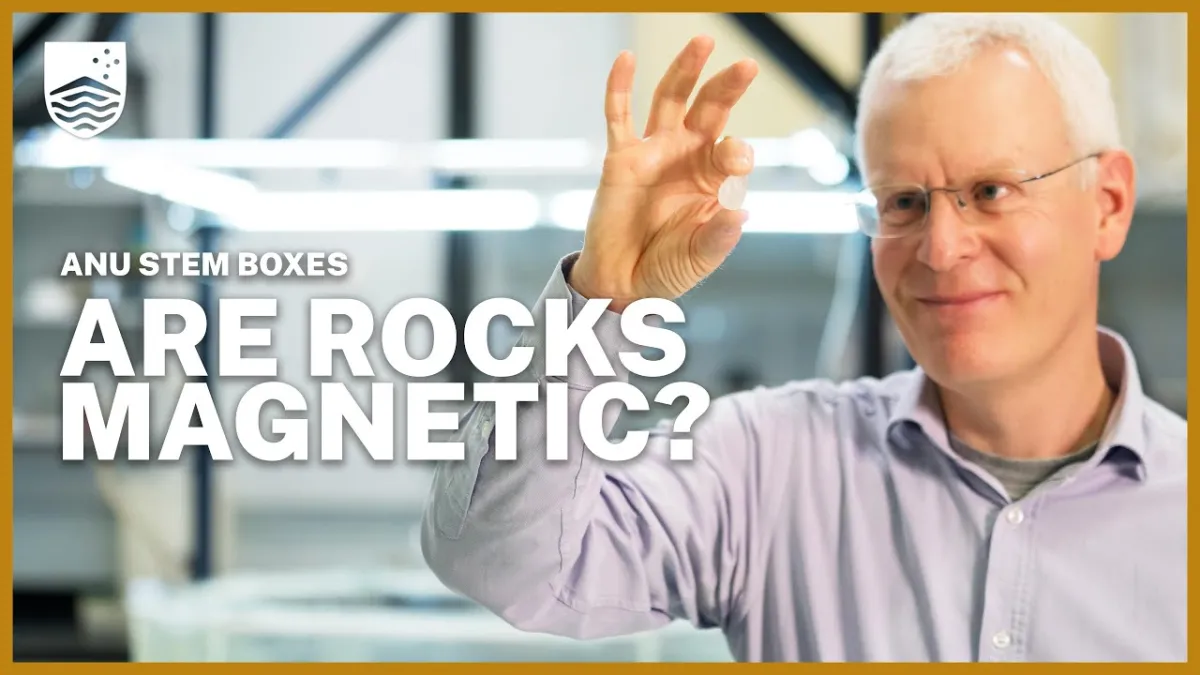
This activity is part of our Science Lab series. Check out the ANU Science Lab for more experiments! In this activity, you will test whether different rocks and minerals are magnetic using a floating water tray and rare earth magnets to explore ferrimagnetism, canted anti-ferromagnetism, and diamagnetism. Watch the video above to see how it is done.
Materials
For this activity:
- A shallow basin or bowl of water
- A floating polystyrene cup base or small plastic lid (to act as a low-friction raft)
- Strong neodymium rare earth magnets
- A pencil and blue tack (to mount the magnets)
- Test samples: a metallic hematite sample, a volcanic basalt rock, and a clear quartz crystal
Safety Note: Handle strong rare earth magnets with care to avoid pinching fingers, and keep them away from electronic devices.
How to test rock magnetism
Step 1: Set up the floating test raft
- Fill your shallow basin with water.
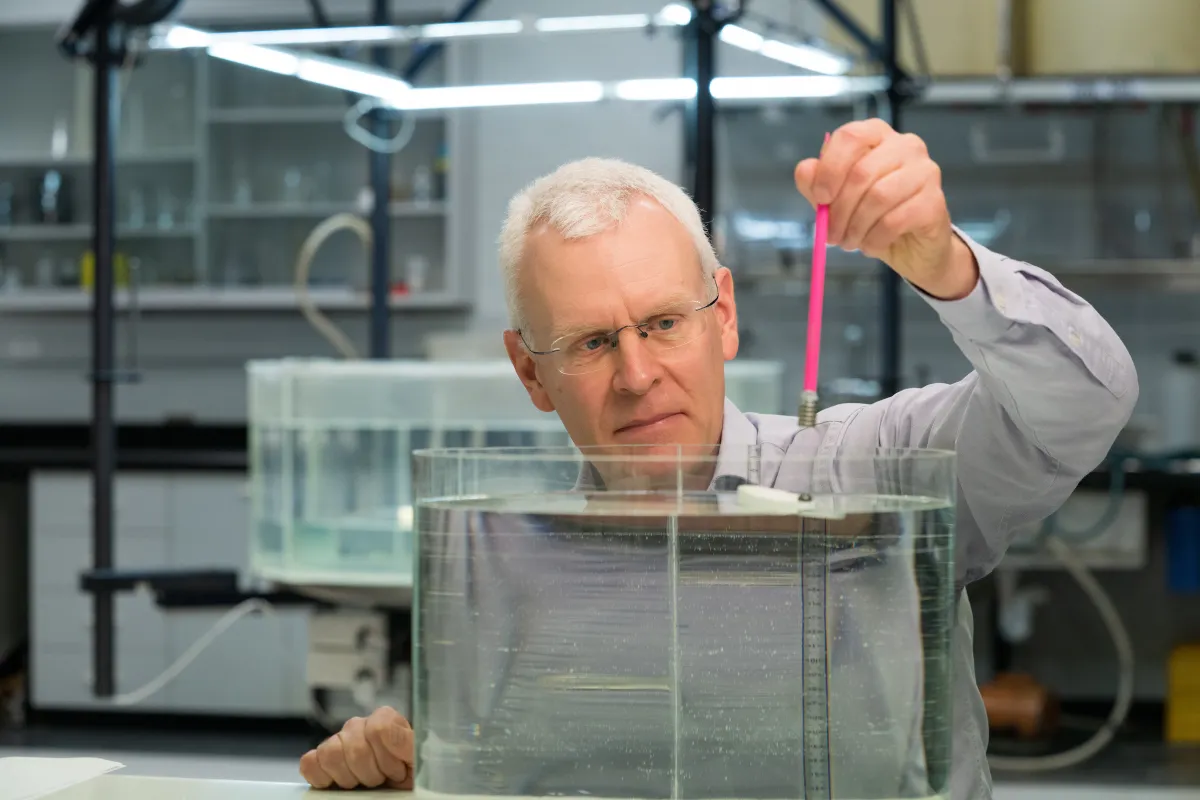
- Place the floating polystyrene cup base on the water surface. Floating your test samples on water drastically reduces friction, allowing even tiny magnetic forces to move the rocks.
Step 2: Test rock attraction with a single magnet
- Place your metallic hematite sample onto the raft and let it settle in the centre.
- Bring a single neodymium magnet close to the sample. Observe how the hematite is strongly attracted and immediately moves toward the magnet.
- Repeat the floating test with the volcanic basalt rock. Notice how the basalt slowly drifts toward the magnet without jumping straight onto it.
- Place the clear quartz crystal on the raft and bring a single magnet close. Observe that no visible movement occurs.
Step 3: Test repulsion using stacked magnets
- Stack several neodymium magnets together on your pencil mount to increase the magnetic field strength.
- Hold the strong magnet stack very close to the floating quartz crystal.
- Observe how the quartz is subtly repelled by the magnet, slowly drifting away across the water surface!
How does it work?
This experiment demonstrates that all matter possesses magnetic properties, which can be categorised into distinct physical behaviours based on atomic structure:
- Basalt contains small amounts of the mineral magnetite. The iron atoms in magnetite align unevenly, creating a strong magnetic response even when only present in small amounts within a rock.
- Hematite contains iron atoms whose magnetic fields mostly cancel each other out, but slight atomic angles (canting) leave a net magnetic force that attracts magnets.
- Quartz contains no iron, yet it responds to magnetism. When exposed to a strong magnetic field, paired electron orbits within quartz shift slightly to produce a weak opposing magnetic field, causing the rock to be repelled by the magnet.
Science fair project: Take it further
- Compare igneous rocks like light coloured granite against dark basalt to measure how mineral composition and iron content affect magnetic attraction.
- Try stacking magnets together to increase their power, or try turning the magnet around and see what happens.
Enjoyed this experiment? Explore more hands-on activities on the Science Lab ANU YouTube channel.
Related content

A new take on 'remote' learning! Infrared waves are hiding in plain sight when you use a smartphone. Try this activity with different remotes and types of cameras - do you get different results?

Play Noughts and Crosses with Charles, and discover how our love of games can teach AI new tricks.
ANU student Anneshwa show you how to make your own DIY electric train using a battery, magnets, and copper wire.