
Making a Cube Bubble
Summary
Degree programs
Research themes
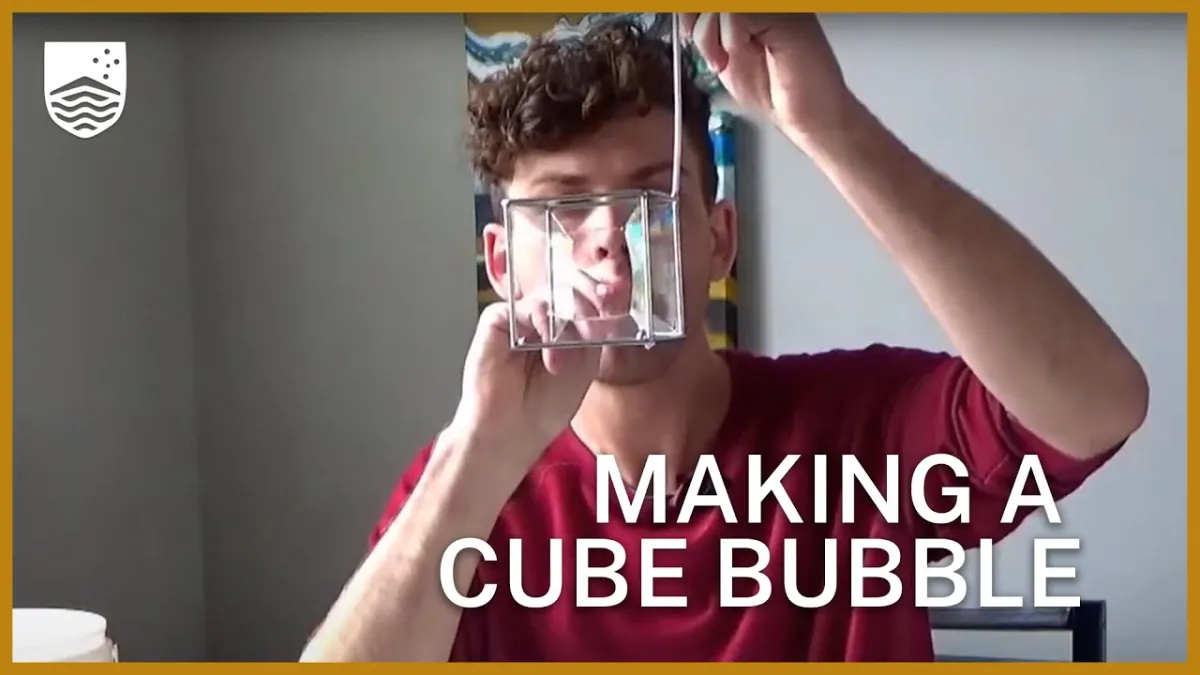
This activity is part of our Science Lab series. Check out the ANU Science Lab for more experiments! In this activity, you will build a cube-shaped frame and use it to create surprising bubble structures. Explore surface tension, soap films and the mathematics of minimal surfaces. Watch the video above to see how it works.
Making a cube bubble materials & ingredients
For this activity:
- 12 plastic straws or reusable drinking straws cut to equal lengths
- Pipe cleaners or craft wire
- A large bucket or deep container
- 1/2 cup dishwashing liquid
- 1/2 cup sugar or 2 tablespoons of glycerine
- 4 cups warm water
- An extra straw for blowing bubbles
How to make a cube-shaped bubble
Step 1: Build the frame
- Cut each straw in half so you have 12 equal lengths.
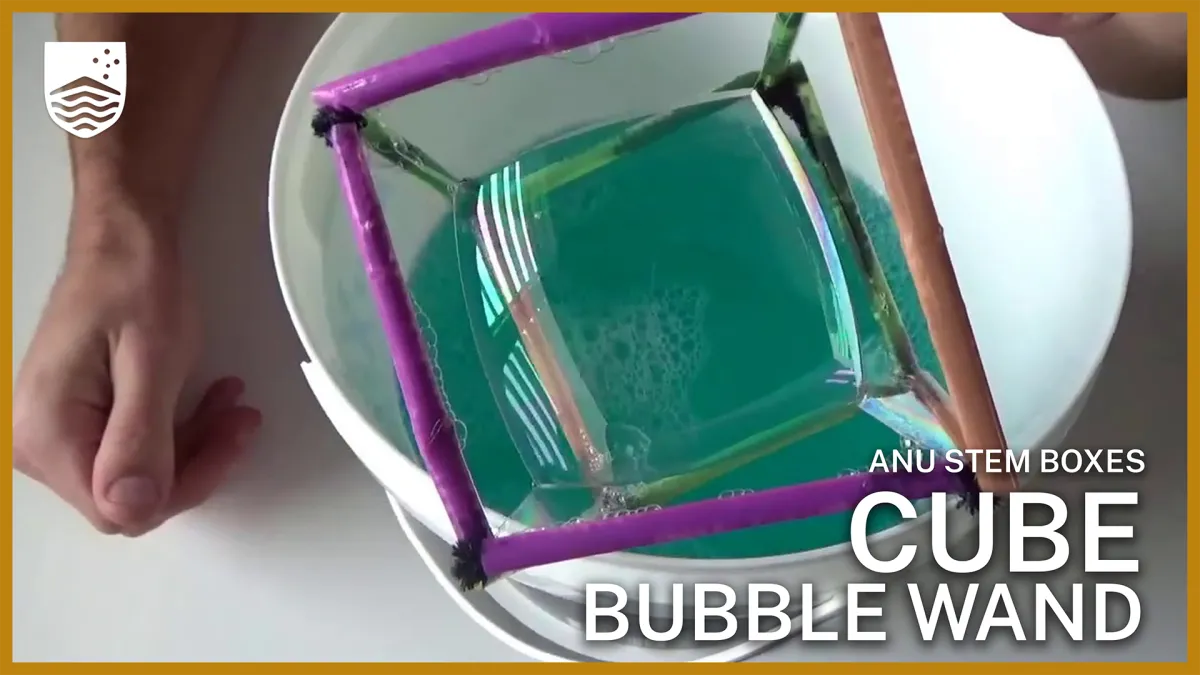
- Thread pipe cleaners or craft wire through the straws to connect the 12 pieces into a cube. It helps to make 2 squares first, then connect the 2 squares together with 4 more pieces of straw joining the corners of the 2 squares together.
- Make sure all edges are securely joined at the corners so the frame holds its shape.
- Add an extra piece of wire or pipe cleaner as a handle for dipping the frame into the bubble solution.
Watch the video on how to build a cube bubble wand below:

Step 2: Make the bubble solution
- Add the warm water, dishwashing liquid and sugar or glycerine to a large container.
- Stir gently until the ingredients are fully mixed.
- Make sure the container is deep enough to completely submerge the cube frame.
Step 3: Create the soap film structure
- Submerge the entire cube frame in the bubble solution.
- Carefully lift the frame straight out of the liquid.
- Observe how soap films form across the faces of the cube and join together inside the frame.
Step 4: Make a cube-shaped bubble
- Dip one end of the extra straw into the bubble solution.
- Carefully place the wet straw into the centre of the frame where the soap films meet.
- Gently blow through the straw to inflate a bubble inside the frame.
- Watch how the surrounding films shape the bubble.
How do cube-shaped bubbles work?
Most soap bubbles form spheres because a sphere encloses the greatest volume with the smallest possible surface area. Surface tension pulls evenly in all directions, creating the familiar round shape.
When a cube frame is dipped into bubble solution, soap films stretch across the edges of the frame. The films naturally arrange themselves in ways that minimise their total surface area.
Inside the cube, the soap films meet along straight lines and form a geometric structure known as a minimal surface.
When you blow a bubble into the middle of this structure:
- The surrounding soap films push against the bubble.
- The bubble expands within the boundaries created by the frame.
- The resulting shape appears cube-like, even though the soap film is still trying to minimise its surface area.
This experiment demonstrates how geometry and physics work together to create complex and beautiful shapes.
Scientists and mathematicians study minimal surfaces in fields such as architecture, engineering and materials science.
Science fair project: Take it further
Once you have made a cube-shaped bubble, investigate how changing the frame or bubble solution affects the results.
- Build different shapes using straws, such as a tetrahedron (pyramid) or triangular prism. What soap film structures form inside each frame?
- Compare a standard soap solution with one containing glycerine or sugar. Which mixture produces the strongest or longest-lasting bubbles?
- Blow different amounts of air into the centre of the cube. How large can the central bubble become before it pops or changes shape?
- Can you blow a bubble inside the middle of the cube bubble?
- Test different frame sizes. Does a larger cube create a different internal soap film structure?
- Create a table to record your observations. Which frame shape produced the most interesting soap film pattern? Which bubble solution created the most durable bubbles?
Enjoyed this experiment? Explore more hands-on activities on the Science Lab ANU YouTube channel.
Related content
ANU student Rishika experiments with a homemade CO2 extinguisher by putting out a burning candle using carbon dioxide.
Bubble Wrangler Jesse shows us how to blow bubbles in a bubble and the science behind it.
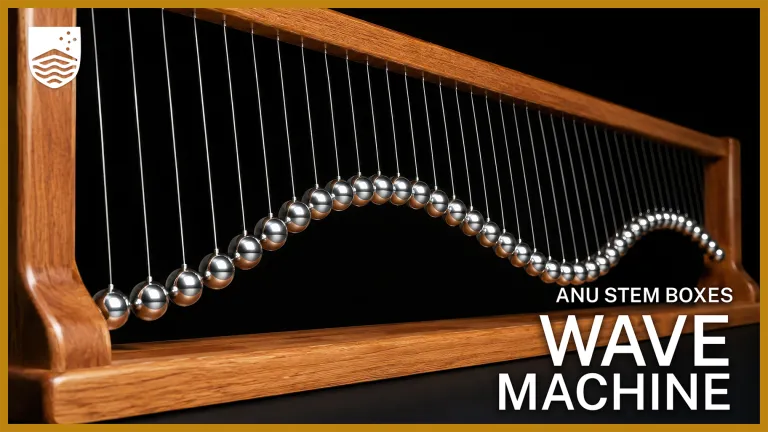
Create your own wave machine at home using jelly beans, skewers and tape. See how waves transfer energy and experiment by taking off jelly beans. How does this affect the wave?